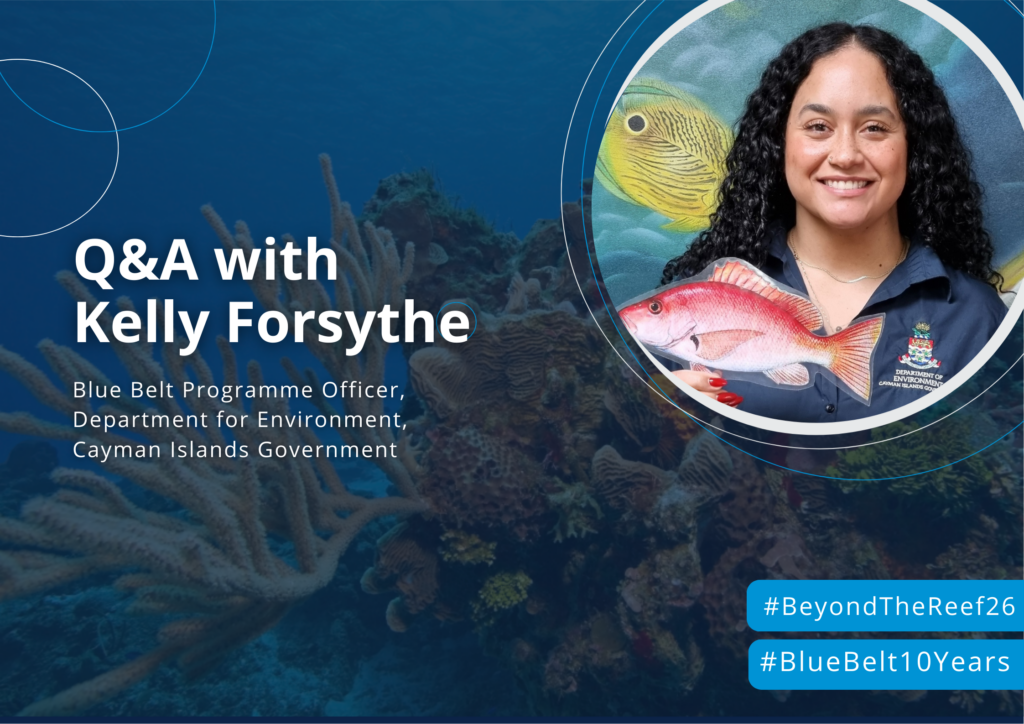
Next year marks a decade since the start of the Blue Belt programme—a milestone that celebrates a decade of marine research, collaboration, and conservation across the UK Overseas Territories. In 2023, the Cayman Islands proudly joined this journey, bringing their unique marine environment and vibrant community into the spotlight. In February 2026, researchers from the Cayman Island’s Department of Environment will join the Blue Belt Programme’s ‘Beyond the Reef’ expedition to the Caribbean.
In this Q&A, we dive beneath the surface with Kelly Forsythe, Blue Belt Programme Officer for the Cayman islands’ Department of Environment, to explore what makes the Cayman Islands’ marine habitats so distinctive, the challenges they face, and the innovative steps being taken to protect them.
Next year marks the programme's 10-year anniversary, and we were proud to welcome the Cayman Islands in 2023 as part of that journey. Could you tell us about the Cayman Islands' geography and what makes its marine environment so distinctive?
In 2023 we were the third Caribbean UKOT to join the Blue Belt programme and while we have similarities with our Caribbean neighbours – every island is unique. The three Cayman Islands (Grand Cayman, Cayman Brac and Little Cayman) were formed when tectonic plates interacted and forced rock upwards creating an underwater mountain range known as the “Cayman Ridge”. The Cayman Trough or “Trench” is adjacent to the Ridge and is the deepest point in the entire Caribbean Sea at 7,686m/25,217ft. Even though we’re at sea level the islands are essentially the peaks of these mountains. This has resulted in a relatively narrow coastal shelf which quickly gives way to our “drop off”. This drop off or wall is one of the major reasons why the Cayman Islands is such a popular dive destination.
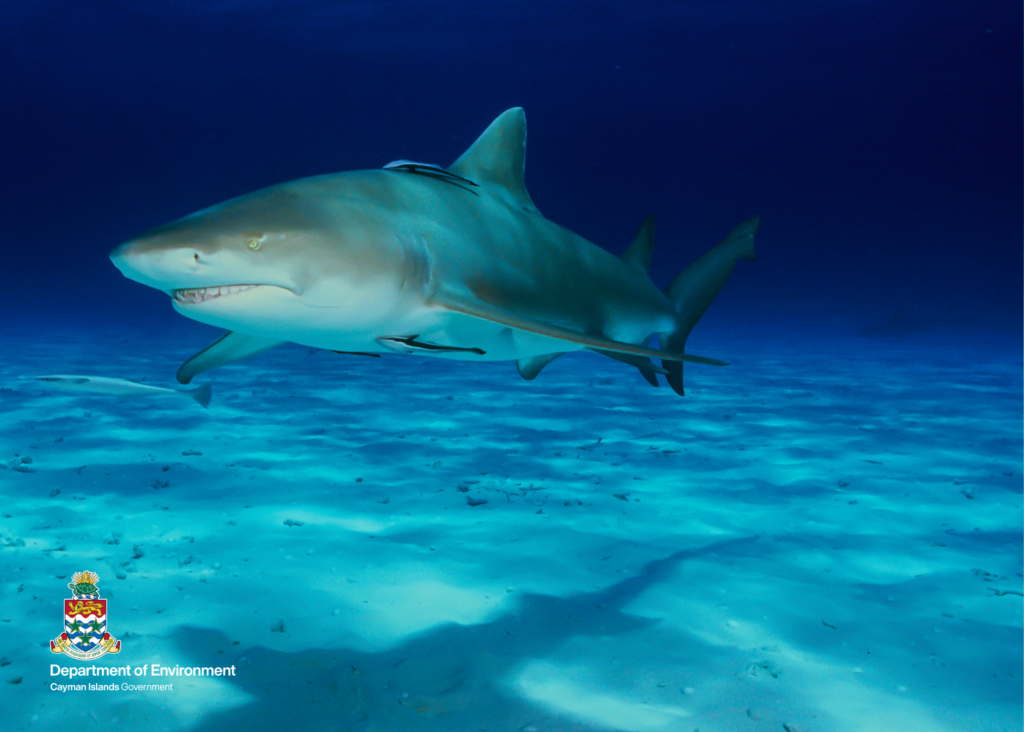
The Cayman Islands is also home to a wide range of marine species, from sea turtles to lemon sharks, to most iconic fish in the Caribbean: the Nassau Grouper. The coral habitats that support this marine life are not only of huge importance ecologically but also economically, bringing in thousands of tourists each year. A lot of Caymanian culture and heritage stems from our relationship with the ocean, so much so that our coat of arms includes the motto “he hath founded it upon the seas”. The ocean has and continues to provide sustenance, play a vital role in transport and sustain the economy through the tourism sector. Being in and around the ocean is still very much a vital part of many Caymanians lives.
Like many OTs, the Cayman Islands' marine environment faces increasing pressure. What changes or threats have you observed in recent years?
One of the major changes we’ve seen recently has been the significant loss of coral cover across all three islands due to climate change and warming ocean temperatures. For Little Cayman this was particularly shocking as cover had dropped from 26% in 2023 to a record low of under 10% in 2024. The overall loss of coral cover can be attributed to major bleaching events coupled with the introduction of diseases (such as stony coral tissue loss disease), the increase in algae and decline in key herbivores (such as parrotfish and the long-spined sea urchin). Loss and damage to natural habitats caused by bleaching and diseases can have profound impacts on the marine ecosystems and species it supports. One of the ways our reefs can remain resilient is through a healthy fish population (especially ones that eat algae), however they are also under pressure from overfishing.
We also know from a recent risk assessment carried out by Cefas that like many small islands, the Cayman Islands is at risk from longer term climate impacts, such as rising sea levels, increased storms and hurricanes and ocean acidification which all threaten marine life, and the people that depend on them. That is why it is so important that we understand the risks facing our marine environments, so that we’re able to put the right measures in place and adapt to the challenges ahead.
What progress is being made in addressing these challenges? How has Blue Belt support and collaboration helped?
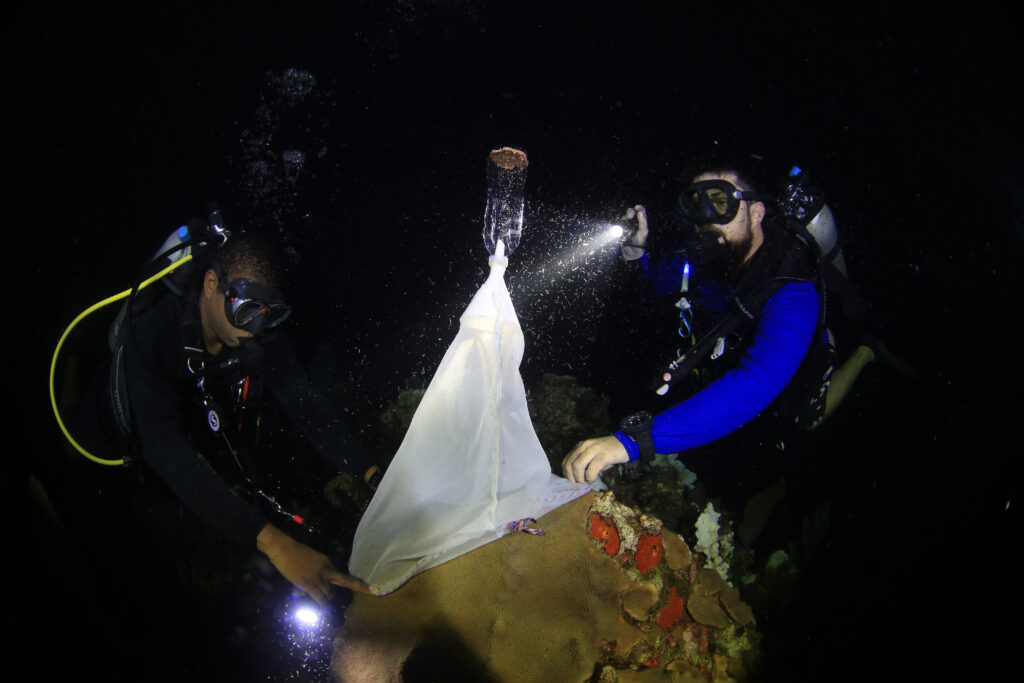
The Department of Environment has been conducting coral health assessments since 1997 and continues to on an annual basis. In 2023 our Coral Conservation team established the coral laboratory and 90% of the corals that were spawned in 2024 successfully celebrated their first birthday this year. It will take another three years before they are mature enough to be planted out on the reef, but it’s a fantastic start.
In 2026 we are also proud to be celebrating 40 years of our Marine Parks. Today, nearly half of the Islands’ nearshore waters are designated as ‘no take zones’, protected by a network of Marine Protected Areas which regulate fishing, some boating and water related activities, which also help to ensure the future protection of our coral reefs.
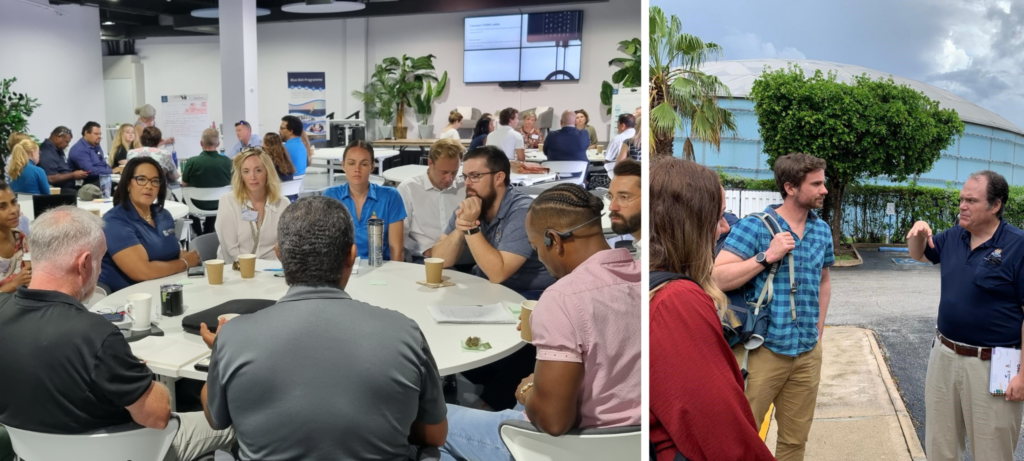
The link between effective marine management and protection and the safeguarding of our environment cannot be understated and through the support of the Blue Belt Programme we hope to build on the Marine Park legacy. We are working with Blue Belt Programme partners to proactively manage and monitor our offshore environment (which is much less understood and studied than shallow water systems) and to understand fishing activity in the region to help inform management strategies. Through this work, the Blue Belt Programme will help us meet international commitments, such as the Global Biodiversity Framework and protecting 30% of our marine environment by 2030.
The Blue Belt Programme is excited to come to the Cayman Islands for the Beyond the Reef Caribbean expedition. What are your key aims for the survey, and how will it support the Government's marine conservation objectives?
This will be the first of its kind for the Cayman Islands – I know that myself, the crew and the Department are excited to be a part of it! We hope to gather a whole range of data to improve our understanding of our offshore and deep sea marine environment and directly feed into improved management of resources, species conservation plans and provide adequate justification for any future MPAs or Other Effective area-based Conservation Measures (OECMs). Areas we will look at include:
- Understanding the level of nutrients, pollutants and microplastics present in our offshore water as well as how they disperse and move with the currents. This information will help the Cayman Islands Government develop targeted protection measures for key ecosystems.
- Outlining the risk of ocean acidification for our coral reefs and other shell building organisms like conch. This information will help the Cayman Islands Government develop targeted protection measures for key ecosystems.
- Identification of habitats and sites of importance including the spawning locations of commercially important species like Nassau grouper, and the feeding sites of seabirds. This research will help understand the best areas for to support improved marine management.
- Exploring connectivity between nearshore and offshore habitats (including deep sea reefs and offshore banks). The Blue Belt survey will map the physical and chemical characteristics of Cayman's offshore waters for the first time, providing essential data to understand how pollution spreads and how marine life connects across different areas. This baseline information will support the development of oceanographic models to help protect Cayman's marine environment.
- Understanding abundance, composition, habitat and depth preferences of economically important deep sea snapper species for the first time
- Observation of the species seen around fish aggregation devices. By understanding current commercial fishing methods and studying seamount ecosystems, Blue Belt aims to support the Cayman Islands in sustainable fisheries management, maximising long-term opportunities for local fishers.
1 comment
Comment by Mick McGowan posted on
Following the discoveries of the Beyond The Reef expedition feels like a ‘coming home’ experience, because I was employed by the Cayman Islands Government in the 1970s as a marine biologist (based at the Mosquito Research and Control Unit, Grand Cayman); and along with Edroy Hydes and Marc Pimbert, I was responsible for the early endeavours to ensure the conservation and protection of the marine ecosystem. We were mainly concerned with the impact of rapidly increasing tourism at this time, and the threat that was apparent - particularly on species such as spiny lobster and queen conch. One of our initial projects was to map the terrain of Frank Sound, as a proposed site for a marine protected area. Fifty years ago, the priority given to ensuring the protection of the marine environment was minimal, and so it is heartening now to see that in the intervening years great advances have been made - such that the future looks so much more positive. Good luck with the remainder of the expedition and all future endeavours aboard RRS James Cook.